




































































Escalating Boko Haram, ISWAP Attacks During Ramadan Raise Security Concerns in Borno
Escalating Boko Haram, ISWAP Attacks During Ramadan Raise Security Concerns in Borno

By Alkali Muhammad Musa, Maiduguri
A recent wave of attacks by insurgent groups, including Boko Haram and the Islamic State West Africa Province, across parts of Borno State has raised fresh concerns about the resurgence of violence in Nigeria’s North-East, particularly during the holy month of Ramadan.
Security reports indicate that between 2023 and 2026, insurgent groups carried out at least 11 attacks during Ramadan, resulting in the deaths of more than 100 civilians and at least 29 soldiers, while over 527 civilians were abducted in different communities across the state.
Ngoshe Massacre
The most devastating of the recent attacks occurred on March 4, 2026, when insurgents launched a coordinated assault on Ngoshe in Gwoza Local Government Area.
Residents said the attack began shortly after 6:20 p.m., as families gathered to break their Ramadan fast.
Insurgents reportedly first overran a nearby military base before entering the community, where they moved from house to house attacking residents.
More than 100 civilians, including the chief imam and several community elders, were reportedly killed during the assault. At least nine soldiers also lost their lives.
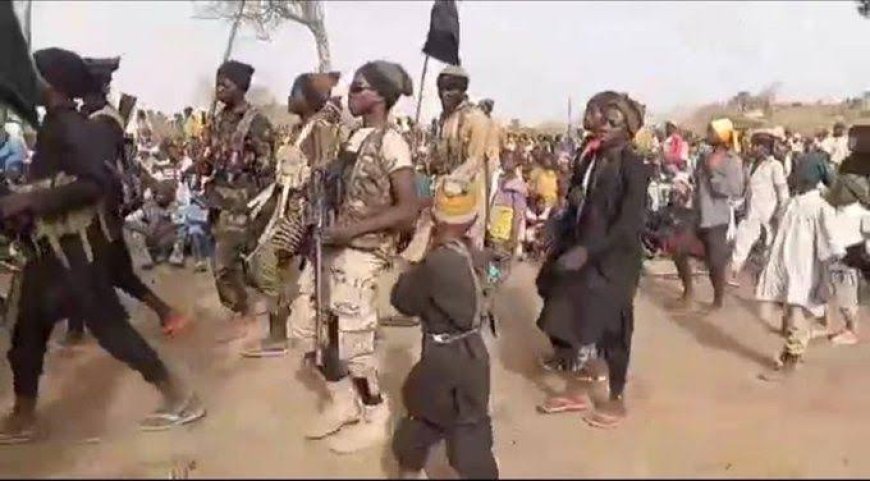
Witnesses said the attackers abducted more than 300 women and children and forced them to march toward settlements believed to be located in the Mandara Mountains along the Nigeria–Cameroon border.
A day after the attack, insurgents released a video claiming responsibility and showing dozens of the abducted victims.
Despite the scale of the abduction, the incident has not drawn the same level of national and international attention as the Chibok schoolgirls kidnapping.
Retaliation After Military Operations
Local security sources say the Ngoshe attack may have been carried out as retaliation following recent clashes between insurgents and security forces.
On January 22, 2026, troops and members of the Civilian Joint Task Force reportedly engaged Boko Haram fighters on the outskirts of Ngoshe.
During the confrontation, three senior insurgent commanders identified as Ba Shulhu, Ubaida, and another unnamed commander were killed.
Sources said CJTF members later beheaded the commanders and displayed their heads in the streets of the community. Videos of the incident circulated widely and were reportedly seen by insurgent fighters.
The development reportedly angered fighters from both Boko Haram factions — Jama’atu Ahlis Sunna Lidda’awati wal-Jihad (JAS) and ISWAP.
Although the two factions have been rivals for years, fighters from ISWAP bases and JAS elements operating in the Mandara Mountains were said to have temporarily suspended their rivalry to carry out a joint retaliation attack on the community.
Why Ngoshe Remains Vulnerable
Security analysts say Ngoshe’s geographic location makes it strategically important for insurgents.
The community lies close to the Nigeria–Cameroon border and the Mandara Mountains — terrain that allows militants to hide in mountainous areas and move across borders.
The town has experienced repeated violence over the past decade.
In June 2013, tensions escalated after residents accused security forces of killing civilians during military operations in the town, triggering mass displacement that forced more than 20,000 residents to flee to neighboring Cameroon.
In April 2014, Boko Haram fighters launched another major attack on Ngoshe and surrounding communities, killing dozens of residents and destroying homes and property.
By 2016, the town had become a significant insurgent operational base before joint military operations by Nigerian and Cameroonian forces weakened the militants’ presence in the area.
What's Your Reaction?
 Like
0
Like
0
 Dislike
0
Dislike
0
 Love
0
Love
0
 Funny
0
Funny
0
 Angry
0
Angry
0
 Sad
0
Sad
0
 Wow
0
Wow
0