




















































































“Save the Bees, Save the Future” — JEWEL Environmental Initiative Marks World Bee Day 2026 with Strong Youth Campaign in Gombe

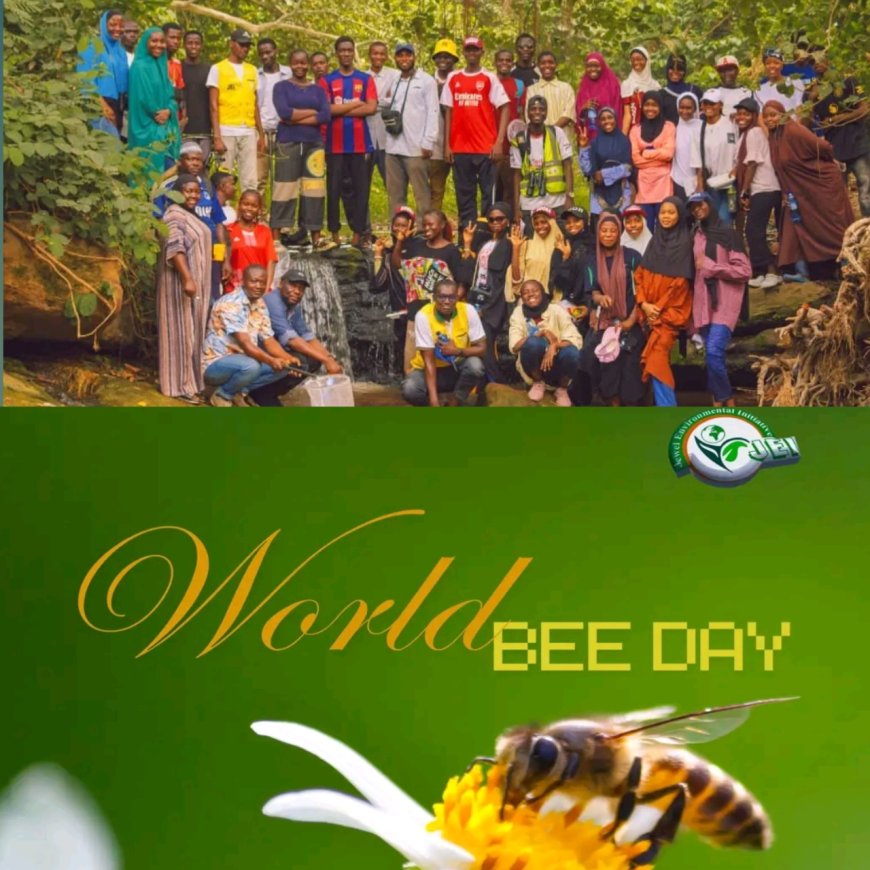
The JEWEL Environmental Initiative has joined the global community in commemorating World Bee Day 2026 with a strong call for youth participation in environmental protection, sustainable agriculture, and bee conservation across Gombe State.
In a statement shared through its official Facebook platform on Tuesday, the organization celebrated this year’s global theme, “Bee Engaged with Youth,” stressing that young people remain central to protecting pollinators and ensuring environmental sustainability in the semi-arid region of Northern Nigeria.
According to the organization, bees play a critical role in pollination, food production, biodiversity conservation, and ecosystem balance, making their protection essential for both environmental and economic survival.
JEWEL Environmental Initiative explained that in communities around the Kanawa Forest Reserve, youths are already being mobilized to champion agroforestry and climate-smart environmental practices aimed at preserving nature while improving livelihoods.
The organization noted that young volunteers and environmental groups have continued planting bee-friendly tree species, including Parkia biglobosa popularly known as locust bean trees, to strengthen local ecosystems and support pollination activities.
It further revealed that modern apiculture training programmes are being introduced to empower students and youth groups with practical beekeeping skills capable of generating income while simultaneously protecting forest reserves from degradation and illegal exploitation.
JEI stated that the initiative is also helping to create green jobs for rural youths by promoting honey production and sustainable environmental enterprises that reduce pressure on natural forests.
The organization added that with support from the Gombe State ACReSAL, several youth-led environmental campaigns are ongoing to discourage indiscriminate pesticide use and encourage the adoption of eco-friendly bio-pesticides that are less harmful to bees and other beneficial insects.
According to the statement, preserving bee populations is directly linked to food security, environmental protection, and climate resilience, especially in vulnerable regions already facing desertification and environmental decline.
“When we engage the youth to protect the bees, we secure our food, our environment, and our future,” the organization stated.
Environmental experts have continued to warn that declining bee populations across the world could have devastating consequences on agriculture and global food systems due to the major role pollinators play in crop production.
World Bee Day is celebrated annually every May 20 to raise awareness about the importance of bees and other pollinators, as well as the threats they face from climate change, habitat destruction, pesticides, and environmental pollution.
What's Your Reaction?
 Like
0
Like
0
 Dislike
0
Dislike
0
 Love
0
Love
0
 Funny
0
Funny
0
 Angry
0
Angry
0
 Sad
0
Sad
0
 Wow
0
Wow
0